
Hiring anyone to transform a home is a big, vulnerable decision. Clients aren’t just hiring a style; they are letting strangers into their space and trusting your process, your integrity, and your standards.
Your home renovations & interior website has to showcase all of this at a glance. Your website design also needs to demonstrate the quality of your work, your aesthetic, and how you run a project from consultation to punch list.
Research backs what we see every day: people form snap judgments about a website in milliseconds, and that first impression shapes perceived credibility and even usability.
What does that mean? Polished design, clear structure, and visible proof change how prospects judge your firm before they ever call. Nielsen Norman Group +1 Stanford’s web-credibility guidelines say it best—people quickly evaluate a site by its visual design and professionalism.
Keep reading to discover a practical website design framework you can follow for your home renovations & interior design business. Also, check out the home renovation & interior design website design example to inspire you to make those much-needed tweaks to your website, especially if you have been around for a while or are starting fresh.
Home Renovations & Interior Design Website Design Tips
Here are our expert tips when it comes to building your home renovations & interior design website:
Lead with service quality (and your process), not just images of pretty rooms
The interior design, home improvement, and renovation industry is plagued by over-promising on timelines, budgets, and execution. Clients want to see what makes you different in this process.
Add a “How We Work” section that sets expectations around consultation, scope, procurement, trades, milestones, change orders, and walk-throughs.
When you do this, it reads as leadership and reduces risk for the buyer. Transparency in an industry rife with unexpected events is key to building trust.
Show your aesthetic and your service style
Clients hire for taste and vision. They’re asking: “Do we like their look?” and “Will they manage my project like a pro?”
You want clarity about what you do and where you work, queues that signal your approach (such as “end-to-end design/build with white-glove communication”), and editorial-quality imagery. These can all change the way people book with you.
Great interior/design sites blend style with usability and make service areas obvious.
Clarify exactly what you do (and don’t)
Don’t make potential clients guess. They have enough on their plate already. Spell out the categories: full-service interiors, kitchen/bath remodels, additions, outdoor living, procurement-only, commercial, etc.
Also note what’s in-house vs. via trade partners (GC, electrical, plumbing). Clear service architecture saves everyone time and attracts the right jobs.
Portfolio pages that group by category can help clients self-select. Industry guides emphasize that strong portfolios pair stunning visuals with concise descriptions and easy contact paths.
Humanize the team
Remember: people are letting you into their home. So, it’s essential to show faces, credentials, and roles. Short bios + an “Our Standards” list (“we protect your time, we cover floors daily, weekly status emails”) create instant comfort and set expectations.
Articles aimed at remodelers keep returning to the same theme: transparent communication builds trust and leads to smoother projects.
Create a clean booking runway
Your website tells the story; your scheduler picks a time. Don’t send cold traffic straight to a generic Google Form. Elicit their next step, like “Book a design consult” or “Request a site visit.” This sequence raises perceived value and reduces no-shows.
Home Renovations & Interior Design Website Design Examples
Check out these website design examples for previous home renovation and interior design businesses we’ve had the privilege of working with:
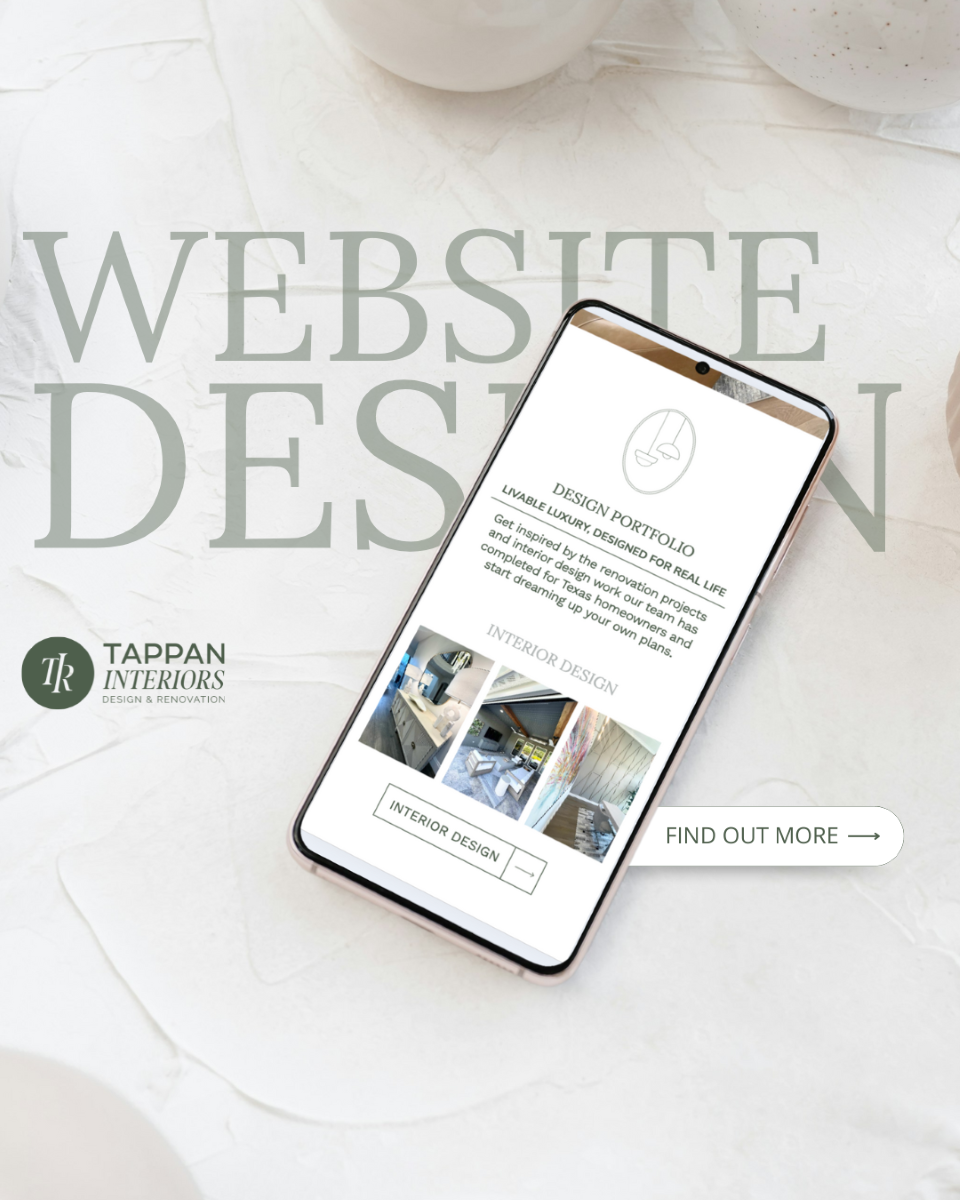
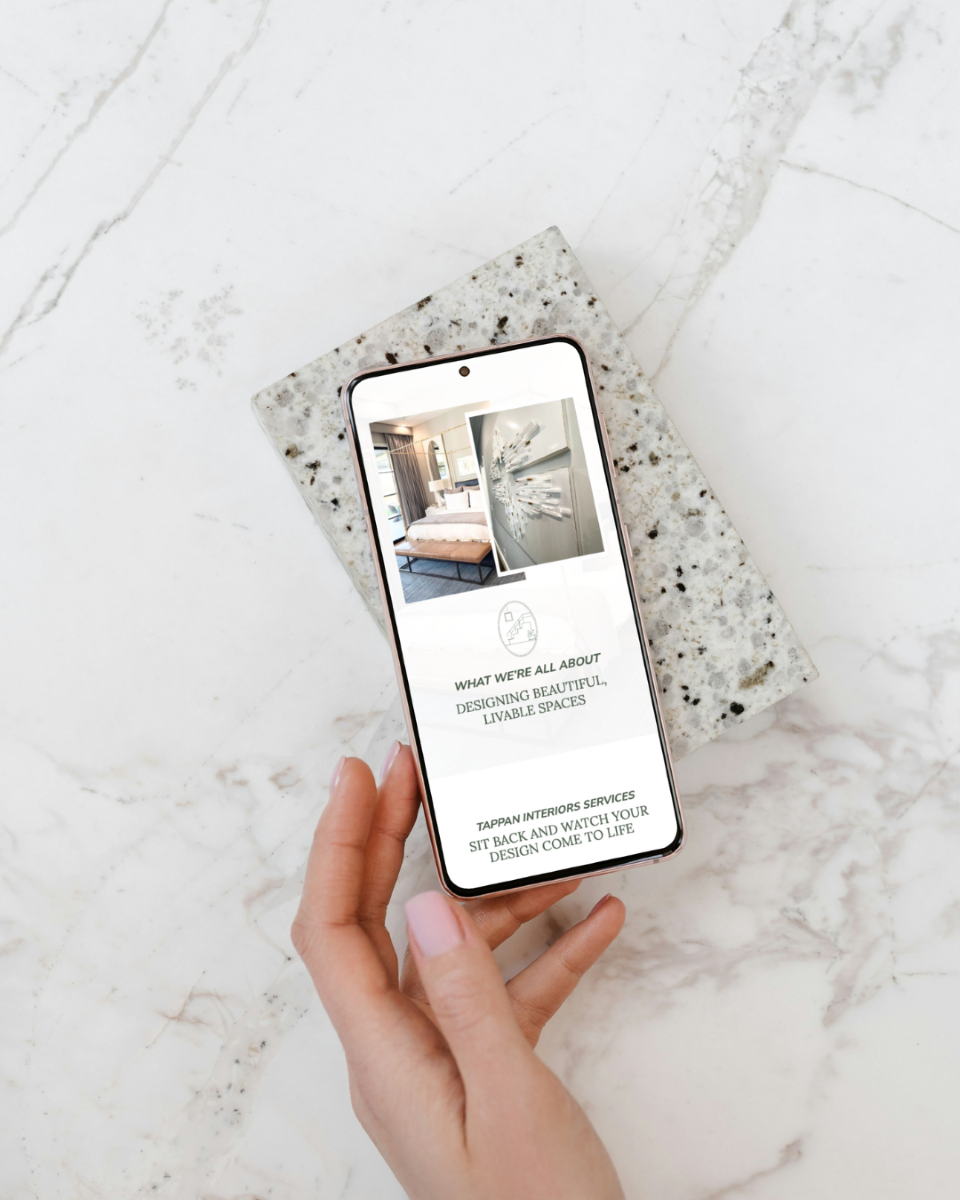
Tappan Interiors
Tappan Interiors’ website builds trust on the first scroll. We included a clear hero that names both of their services (remodels + interior design), added visible service tiles (Consultation, Interior Design, Renovation), and featured a bank of neighborhood-specific testimonials that read like social proof from real nearby clients.
Their website also humanizes the team with a concise founder story (MBA + project-management background) and repeats local signals (“Frisco and beyond”), which all reduce risk for a homeowner letting someone into their space.
Process clarity, social proof, and locality are doing the heavy lifting on this website—not just images of pretty rooms.
Check out their full website here.


MHR Texas (Real-estate investors/renovations)
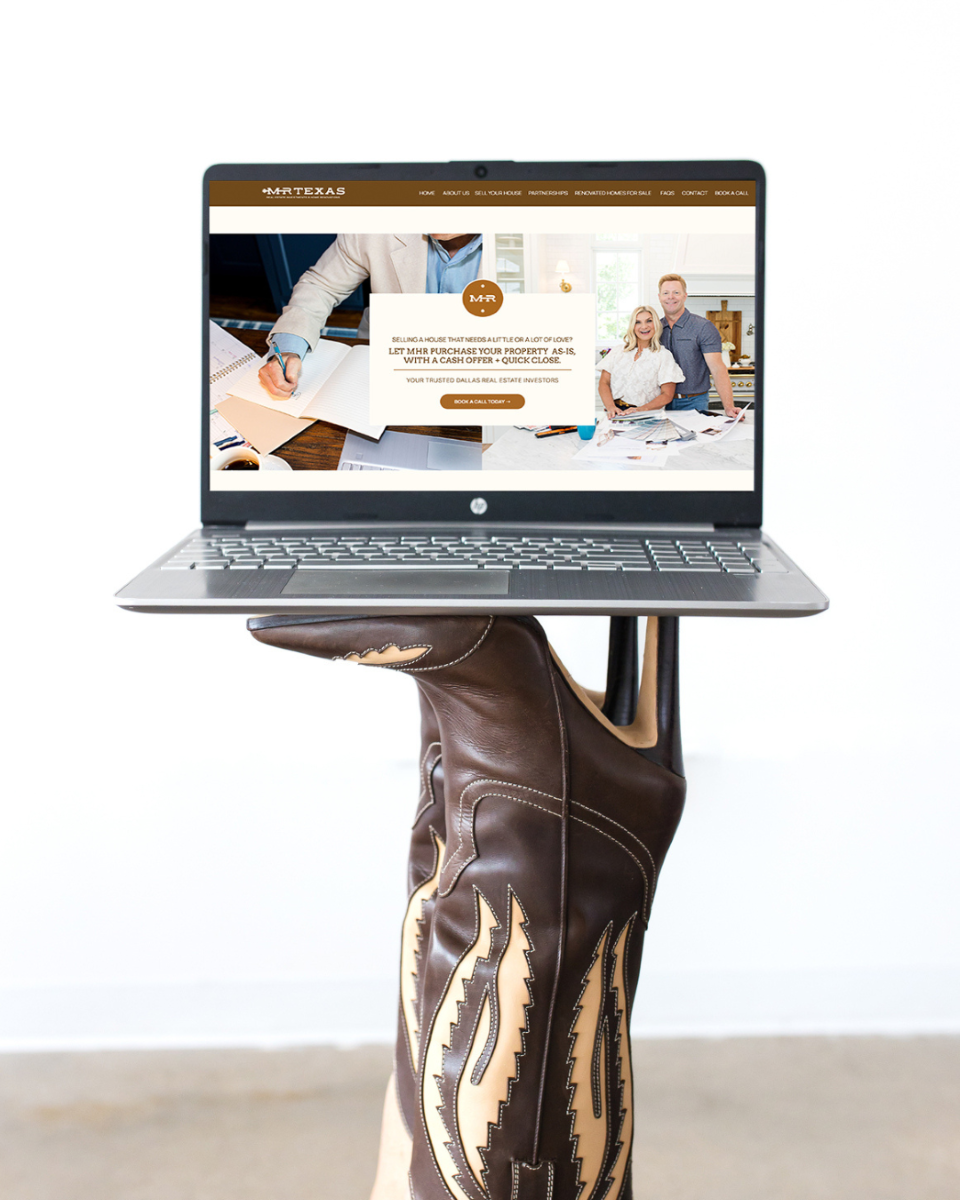
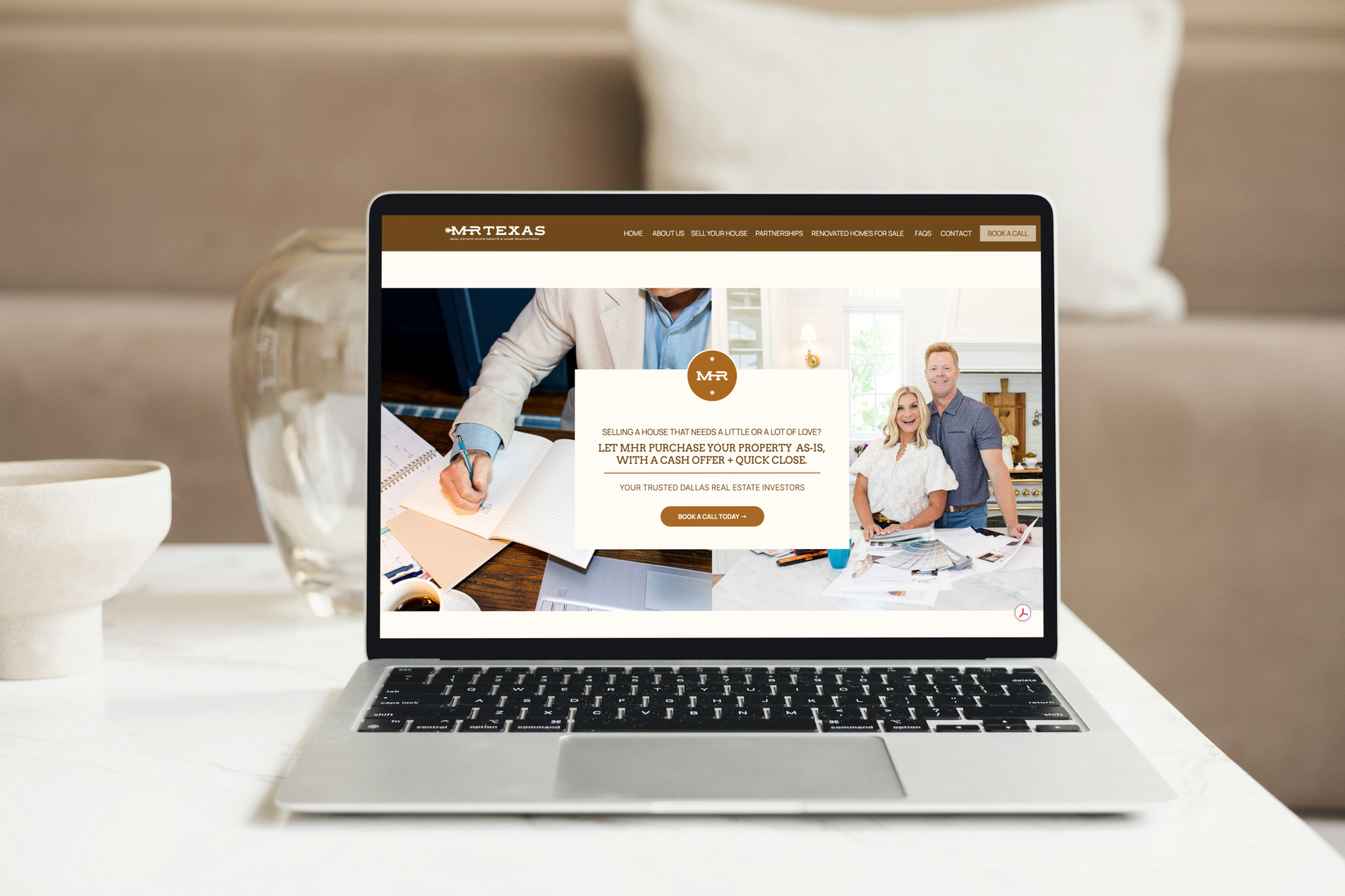
MHR Texas’s website shows how service style and integrity can be communicated quickly. We included an outcome-first headline (“cash offer + quick close”), repeated CTAs, and a “Who we buy from” section that addresses common situations (inheritance, foreclosure, etc.).
The relevant takeaway is how they foreground trust (simple process, expectations, licensed Realtors) and then back it up with a “Renovated Homes for Sale” hook.
This website gives solid proof that the work gets completed and sold, not just promised. It’s an excellent pattern for renovation firms to mimic: promise → process → proof, within one scroll.
Check out their full website here!


MHR Designs (Custom home renovations)
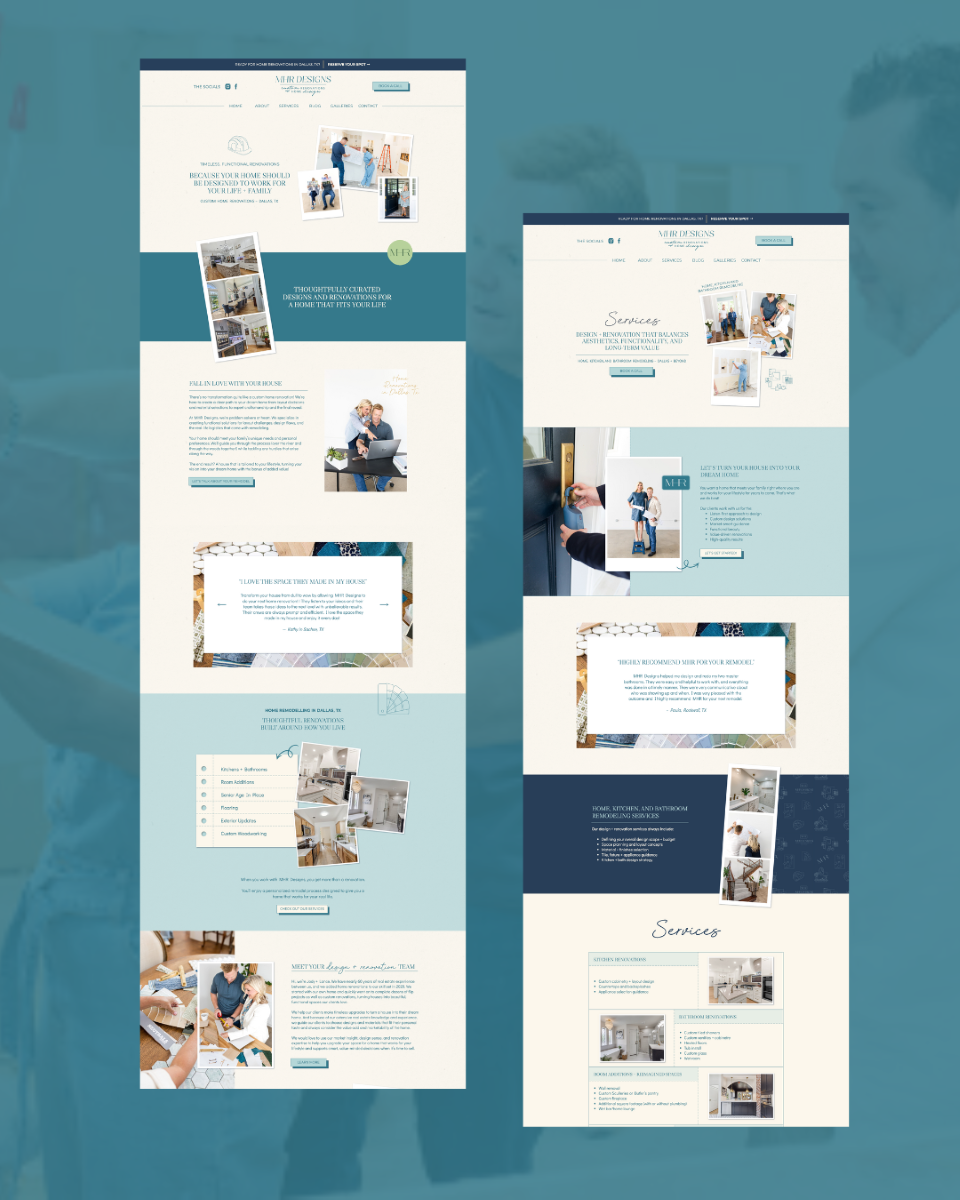
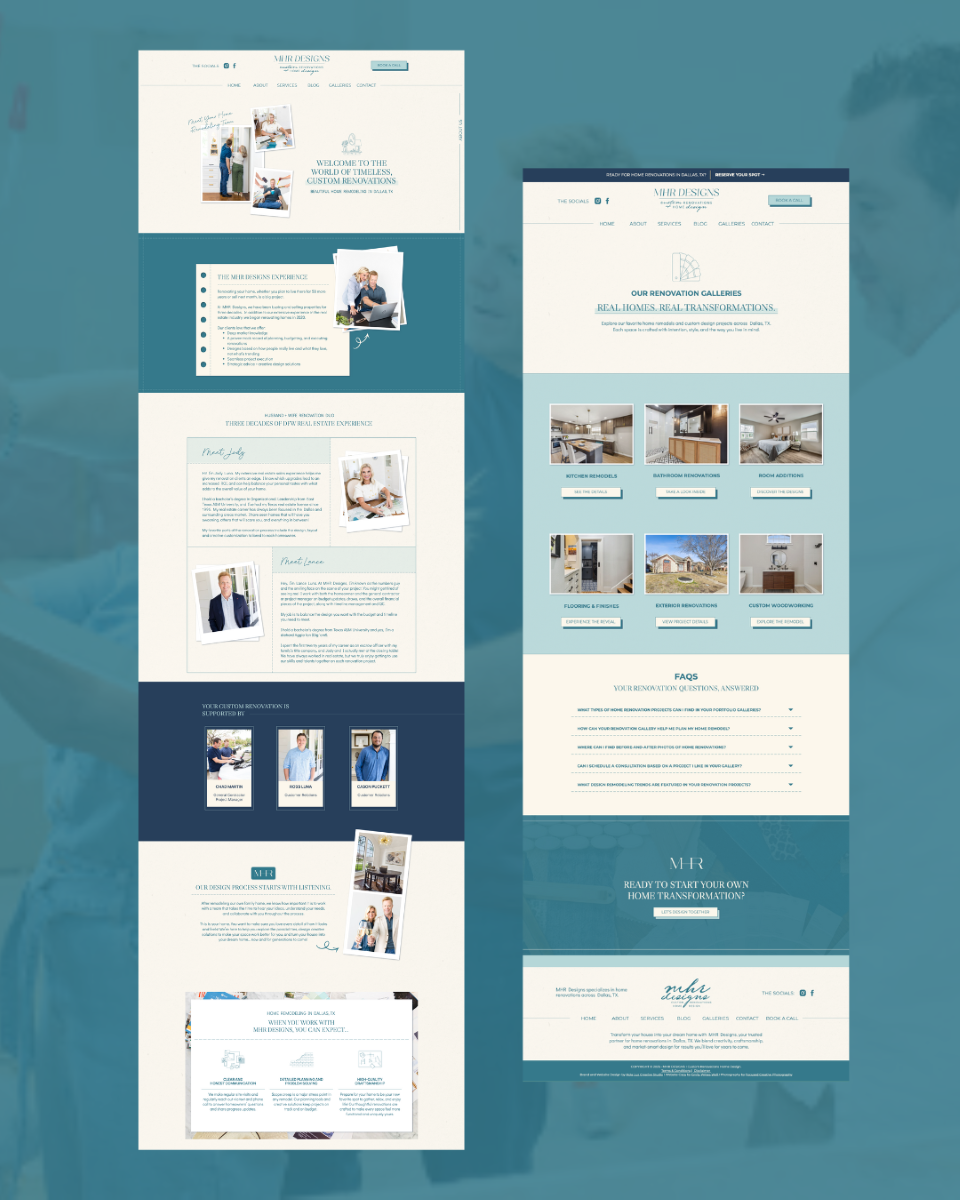
MHR Designs’ website is a textbook example of service clarity + proof + team. The hero names the category and location (“Custom Home Renovations – Dallas, TX”), then immediately explains the experience (layout decisions → selections → craftsmanship → final reveal).
They stack social proof (multiple recent reviews), spell out project categories (Kitchens/Baths, Additions, Age in Place, Exterior, Woodworking), and introduce the founders with a credibility angle (nearly 60 years of real-estate experience informing design choices).
The cross-link to their sister company also reinforces delivery capacity. Together, it signals: we know design, we manage builds, and we finish well—exactly what homeowners need to feel before they inquire.
Ready to Invest in Web Design for Your Home Renovation & Interior Design Business?
Hopefully, you found these home renovation & interior design website design tips + examples helpful. Remember, your website is your chance to show the standard you work at every day and invite the right clients into an experience they can feel from the first scroll.
Tell your story with confidence. Show your method. Make your work easy to choose. When you do, you won’t just book more clients, you’ll book better ones.
The good news? You don’t have to design your website on your own. There may be other people who do what you do, but nobody does it like YOU. We are here to build you a website that does all the heavy lifting for you and helps bring your dream clients straight to your doorstep.
You can learn more about our website design services here or get in touch with us here.
Read these next
What Is the Difference Between a Personal Brand vs. a Business Brand?

Hi! I am Natalia, Founder of Hola Luz Creative Studio.
Your brand strategist, creative visionary, entrepreneur at heart, and cheerleader for your brand's success. I'm here to empower you to elevate your business, connect with your target audience, and express your unique story through powerful brand design. Let's collaborate, create, and make an impact together!
BLOG
Home Renovations & Interior Design Website Design Tips + Examples
BRAND DESIGN
WEB DESIGN
CLIENT HIGHLIGHTS
FOUNDERS

